




10 Ways Cloud Services Can Transform Public Sector Operations

508
Public sector organizations are under increasing pressure to provide services that are efficient, transparent, and budget-friendly. Citizens demand quicker responses, agencies need to adhere to stringent regulations, and there’s constant scrutiny on spending.
Cloud technology offers a valuable solution by modernizing infrastructure, simplifying processes, and enhancing engagement with the public. Its ability to scale and adapt makes it a crucial factor in driving operational change.
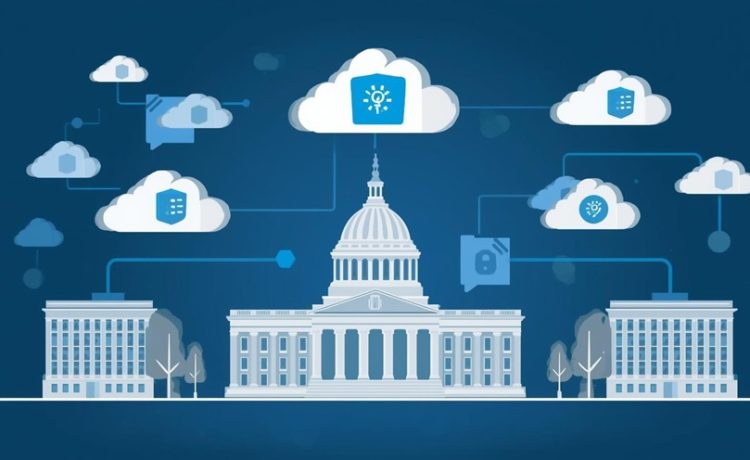
Cloud services for government centralize data, applications, and communication, allowing agencies to adapt quickly to new demands. This approach reduces bottlenecks, supports faster service delivery, and creates opportunities for innovation. Governments can focus on public needs while maintaining accountability and regulatory compliance.
Government Utilizing Cloud Services
Cloud computing allows organizations to store, manage, and process data on remote servers accessed via the internet. For public sector agencies, cloud services offer an alternative to costly and cumbersome on-premises systems. Public clouds deliver scalable, cost-effective solutions, private clouds offer enhanced security, and hybrid clouds combine efficiency with regulatory compliance.
Selecting the right cloud model ensures agencies optimize performance while protecting sensitive information. Proper implementation allows seamless workflows, reduces IT overhead, and forms the foundation for digital transformation. Adaptable cloud services enable governments to respond efficiently to evolving operational requirements.
In this post, we’ll give you ten ways cloud services can help in the public sector:
1. Enhanced Data Management and Storage Solutions
Data drives modern governance, and cloud storage eliminates reliance on physical servers. Agencies gain secure access to information from any location, improving accessibility across departments. Centralized storage reduces duplication, simplifies records management, and enhances accuracy.
Cloud systems include automated backups and redundancy, ensuring critical records remain intact during outages or cyber incidents. Instant data retrieval supports faster decision-making, operational efficiency, and continuity of essential services.
2. Cost Efficiency and Budget Optimization
Traditional IT infrastructure demands significant capital investment and ongoing maintenance. Cloud computing shifts expenses to subscription or usage-based models, enabling more efficient budget allocation. Agencies can scale resources according to demand, reducing costs associated with idle hardware.
Case studies show public sector organizations achieve substantial savings by moving workloads, storage, and applications to the cloud. Savings can be reinvested in frontline services, infrastructure improvements, or citizen programs, enhancing overall efficiency and public service delivery.
3. Improved Citizen Services and Engagement
Citizens expect government services to be accessible, efficient, and user-friendly. Cloud platforms enable agencies to create online portals, mobile apps, and self-service tools that simplify interactions. Tasks like license renewals, benefit applications, and complaint submissions can be completed digitally, reducing administrative delays.
Cloud solutions also provide real-time updates, notifications, and status tracking, increasing transparency. Improved accessibility strengthens public trust and satisfaction while allowing agencies to respond more effectively to citizen needs.
4. Advanced Analytics for Better Decision-Making
Cloud computing empowers agencies to analyze large datasets at scale. Insights derived from analytics help identify patterns, forecast trends, and support evidence-based policy decisions. Predictive analytics optimizes resource allocation, enhances program effectiveness, and improves emergency preparedness.
Scenario modeling and risk assessment tools allow officials to evaluate strategies before implementation. These insights drive smarter governance, proactive problem-solving, and better prioritization of initiatives based on measurable outcomes.
5. Boosting Collaboration Across Departments
Cloud technology streamlines collaboration and communication within and between departments. Shared platforms ensure all teams access the same information simultaneously, reducing delays and errors caused by siloed systems or manual data transfer.
Remote and hybrid work arrangements become feasible as employees securely access documents, databases, and applications from any location. Features like shared editing, version control, and workflow automation enhance efficiency and accelerate project completion.
6. Enhanced Security and Compliance Measures
Security is critical in public sector operations due to sensitive citizen data and operational information. Cloud providers implement encryption, multi-factor authentication, continuous monitoring, and other advanced cybersecurity measures to protect against breaches.
Cloud platforms also simplify compliance with regulations such as GDPR, HIPAA, and government-specific mandates. Automated auditing, reporting, and governance tools provide agencies with consistent security management, reducing risk while maintaining operational flexibility.
7. Disaster Recovery and Business Continuity Planning
Natural disasters, cyberattacks, and system failures can disrupt public sector operations. Cloud solutions offer disaster recovery tools that maintain data and application availability during crises. Automated backups and geo-redundancy minimize downtime and prevent data loss.
Rapid failover and recovery allow agencies to restore essential operations quickly, ensuring continuity of public services. Cloud-based continuity planning reduces operational disruption and supports government resilience under unexpected conditions.
8. Agility and Scalability in Public Projects
Government projects often experience variable demand. Cloud computing allows rapid deployment of resources and scalable infrastructure, accommodating temporary spikes or project-specific requirements. This flexibility prevents delays caused by insufficient IT capacity.
The ability to expand or reduce resources on demand allows agencies to align costs with operational needs. Cloud scalability eliminates the need for extensive hardware investments while enabling efficient project execution.
9. Driving Innovation Through Cloud-Based Platforms
Cloud platforms enable agencies to explore innovative solutions in AI, IoT, and smart cities. By allowing them to trial pilot programs and incorporate new technologies without high initial costs, these platforms encourage creativity and progress in enhancing public services for the community.
Rapid iteration and resource flexibility enable successful projects to scale across departments. Cloud-driven experimentation improves operational efficiency, strengthens public engagement, and encourages modern service delivery.
10. Reducing Environmental Impact with Sustainable Cloud Practices
Embracing cloud technology can significantly reduce environmental impact by relying on centralized, energy-efficient data centers. Many providers prioritize renewable energy, which helps to decrease the carbon footprint associated with government IT operations, ultimately contributing to a more sustainable future.
Public sector organizations that transition workloads to cloud platforms also benefit from reduced energy consumption and more efficient resource use. Sustainable cloud practices align operational efficiency with broader environmental goals.
To Sum It Up
Cloud computing transforms public sector operations by improving efficiency, enhancing citizen services, and supporting informed decision-making. Agencies can optimize costs, maintain strong security, and adopt innovative solutions using cloud platforms.
Integrating cloud services enables governments to operate transparently, respond rapidly to citizen needs, and provide sustainable services. These improvements strengthen organizational performance and create measurable benefits for the public.